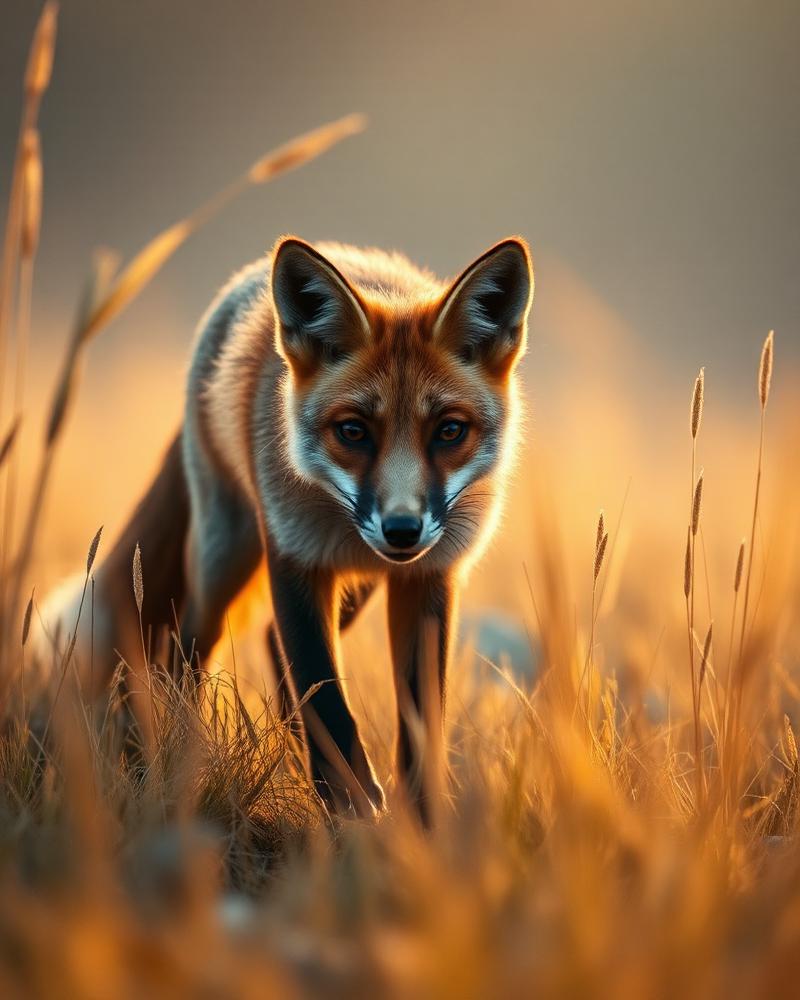
Red Fox

Red Fox

Vulpes vulpes · "The Rusty Vagabond"

Population stable

My superpower

I use Earth's magnetic field to pounce on prey I can't even see.

My weird habit

I collect shiny objects and hide them near my den.

Did you know

I can hear a watch ticking from 40 metres away.

Why I matter

EB

Ecosystem Balancer

I keep rodent and rabbit populations in check across cities, suburbs and forests — the ultimate opportunistic neighbour.

Species information

About the Red Fox

The Red Fox (Vulpes vulpes) is the most widely distributed wild carnivore on Earth, thriving from Arctic tundra to city centres. It is instantly recognisable by its rusty coat, white-tipped brush and dark stockings — though urban foxes are often mangier, leggier and bolder than their countryside cousins.

Foxes have followed humans into every kind of landscape we have built. In London alone, an estimated 15,000 foxes now share the streets with 9 million people, feeding on scraps, worms and small mammals in gardens and parks.

Habitat & range

Red Foxes are one of the most adaptable mammals in the world. They live in mixed woodland, farmland, sand dunes, moorland, suburbs and dense city centres. What they need is a dry earth or dense cover for a den, and any reasonable food supply within a few kilometres.

Urban foxes usually den under garden sheds, in overgrown railway cuttings, or in disused burrows. Their territories are much smaller in cities (0.2–0.4 km²) than in the countryside (up to 40 km²).

Diet

Foxes are true opportunists. Their diet is roughly one-third small mammals (voles, mice, rabbits), one-third invertebrates and windfall fruit, and one-third scavenged food — including a growing share of human waste in cities.

They cache surplus food, burying kills or scraps for later, and can remember dozens of cache locations for weeks.

Behaviour & life cycle

Foxes are mostly crepuscular, hunting at dawn and dusk, but urban foxes shift more of their activity into the deep night. They live in small family groups: a breeding pair plus one or two grown daughters that help raise the next litter.

Cubs are born blind in March–April, emerge from the den at about four weeks, and stay with the family until the autumn dispersal. The famous 'fox scream' heard on winter nights is usually the female's mating call.

Main threats

Despite being of Least Concern globally, Red Foxes face routine culling, road mortality (the biggest killer in the UK — an estimated 100,000 foxes are hit by cars each year), and sarcoptic mange, which can wipe out whole urban populations.

Taxonomy

Kingdom
Animalia
Phylum
Chordata
Class
Mammalia
Order
Carnivora
Family
Canidae
Species
Vulpes vulpes

Help me

2 active ways
Never feed foxes by hand
Secure your compost bins

Take real action

5 verified

Every link goes to the official conservation organisation. Wildly takes no fee.

Local & national

donate · The Fox Project

Support UK fox rescue

Can't take part? Help it reach someone who can.

volunteer · The Fox Project

Volunteer with foxes

Can't take part? Help it reach someone who can.

Global & international

learn · IFAW

Global fox facts & threats

Can't take part? Help it reach someone who can.

learn · IUCN Red List

Official Red List assessment

Can't take part? Help it reach someone who can.

donate · WWF International

Fund global habitat protection

Can't take part? Help it reach someone who can.
Learn & earn

Sign in to take the species quiz and keep your learning history.

Conservation

Loading…

Status

Trend

Assessed

Range

Source: iNaturalist

Frequently asked questions

Are urban foxes dangerous?

+

No. Red Foxes are naturally shy and attacks on humans are vanishingly rare. Even in cities where they live at high density, they will almost always run rather than confront a person.

What is that screaming noise at night?

+

The eerie, human-like scream you hear on winter nights is usually a vixen calling for a mate during the January–February breeding season. Dog foxes bark in response.

Do foxes kill cats?

+

Extremely rarely. Cats and foxes are of similar size and both are armed — most encounters end in mutual avoidance. A fox will not stalk a healthy adult cat.

How can I discourage a fox from my garden?

+

Remove food sources (secure bins, don't leave pet food out), block entry points under sheds, and use scent-based repellents. Never trap or poison — it is illegal in many countries and the territory will simply be filled by another fox.

Wildly community findings
Community

Recent sightings

+ Add yours