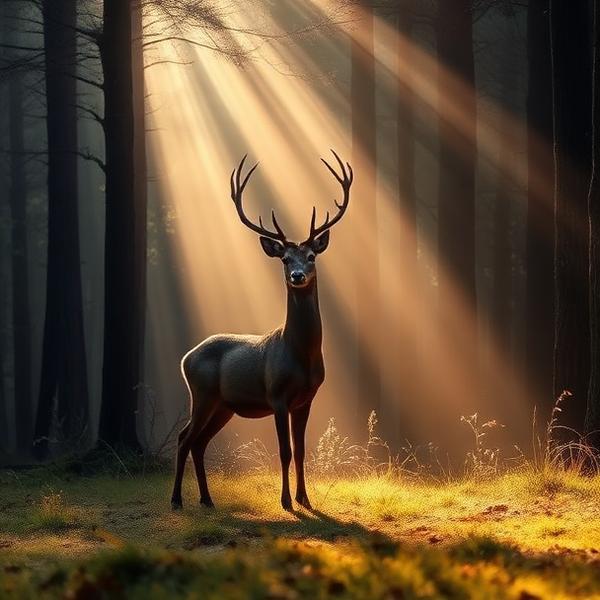
Red Deer

Red Deer

Cervus elaphus · "The Forest Guardian"

Population increasing

My superpower

My roar can be heard from three kilometres away.

Did you know

My antlers can grow up to 2.5 cm per day — the fastest growing tissue of any mammal.

Why I matter

EE

Ecosystem Engineer

My grazing shapes woodland structure, creating light patches where rare plants and insects can thrive.

Species information

About the Red Deer

The Red Deer (Cervus elaphus) is the largest wild land mammal in Britain and one of the largest deer species in the world. Stags can weigh over 200 kg and carry antlers with 12 or more points — the classic 'royal' stag that has stared out of Scottish paintings for two centuries.

Red Deer are found across Europe, the Caucasus, Iran, western Asia and, thanks to introductions, parts of Australia, New Zealand and Argentina. Their British stronghold is the Scottish Highlands and, more recently, Richmond Park on the edge of London.

Habitat & range

Red Deer are woodland animals that adapted to open moorland after their native forests were cleared. They now thrive in mixed woodland, upland moors, farmland edges and large parks. In summer they favour high ground; in winter they drop into sheltered valleys.

A herd needs continuous habitat over tens of square kilometres, which makes them highly sensitive to fencing, roads and wind-farm access tracks.

Diet

Red Deer are grazers and browsers, feeding on grasses, sedges, heather, tree shoots, bark and, in autumn, fallen acorns and beech mast. In hard winters they will strip conifer bark, which puts them into conflict with commercial forestry.

Behaviour & life cycle

Red Deer live in single-sex herds for most of the year. In September–October the rut brings the sexes together: mature stags roar to advertise their dominance, gather harems of hinds, and clash antlers with rivals. The roar of a Red Deer stag can be heard three kilometres away on a still autumn night.

Calves are born in June, spotted for camouflage, and hidden in bracken while the mother feeds nearby. Antlers are shed each spring and regrown in months — the fastest growing tissue in the animal kingdom.

Main threats

Red Deer are Least Concern globally, but in the UK there are separate problems in both directions: local overpopulation in the absence of natural predators damages young forests and rare habitats, while illegal poaching, road collisions and loss of migration corridors threaten them elsewhere.

Taxonomy

Kingdom
Animalia
Phylum
Chordata
Class
Mammalia
Order
Artiodactyla
Family
Cervidae
Species
Cervus elaphus

Help me

2 active ways
Keep dogs on lead near woodland
Drive slowly at dawn and dusk

Take real action

6 verified

Every link goes to the official conservation organisation. Wildly takes no fee.

Local & national

donate · British Deer Society

Support deer research

Can't take part? Help it reach someone who can.

learn · British Deer Society

Red Deer species page

Can't take part? Help it reach someone who can.

adopt · Woodland Trust

Dedicate a tree to their habitat

Can't take part? Help it reach someone who can.

Global & international

learn · IUCN Red List

Official Red List assessment

Can't take part? Help it reach someone who can.

donate · Rewilding Europe

Fund wild landscapes across Europe

Can't take part? Help it reach someone who can.

donate · WWF International

Protect wildlife worldwide

Can't take part? Help it reach someone who can.
Learn & earn

Sign in to take the species quiz and keep your learning history.

Conservation

Loading…

Status

Trend

Assessed

Range

Source: iNaturalist

Frequently asked questions

When is the Red Deer rut?

+

The rut runs from mid-September to late October. It is the best time of year to see and hear Red Deer — stags roar, parade and clash antlers to control harems of hinds.

Are Red Deer dangerous?

+

Red Deer are wild animals and can be dangerous during the rut (September–October) and calving (May–June). Keep at least 50 metres away, never approach a calf, and always keep dogs on a lead.

How fast do Red Deer antlers grow?

+

Up to 2.5 centimetres per day during the spring — the fastest growing tissue of any mammal. Antlers are cast every March and fully regrown by August.

Where can I see wild Red Deer?

+

In the UK, the Scottish Highlands, Exmoor, the Lake District, the New Forest and Richmond Park hold the largest herds. Across Europe, the Bavarian Forest, the Białowieża primeval forest and Spain's Sierra de Gredos are classic viewing sites.

Wildly community findings
Community

Recent sightings

+ Add yours