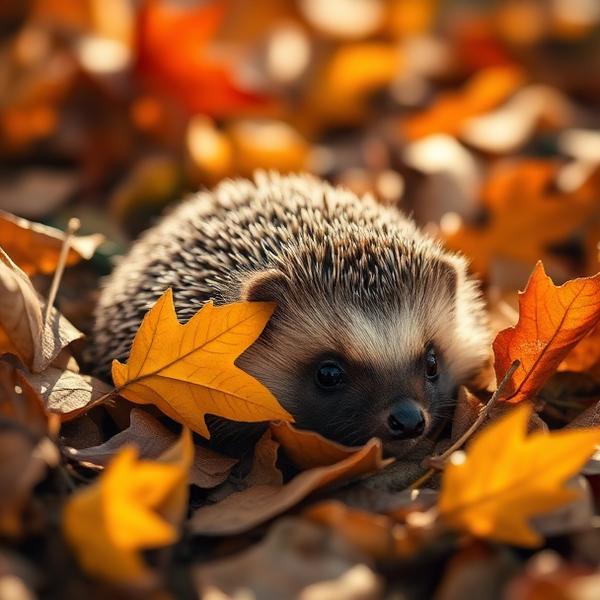
European Hedgehog

European Hedgehog

Erinaceus europaeus · "The Spiky Wanderer"

Population decreasing

My superpower

I roll into a perfect spiny ball when I'm scared.

My biggest fear

Being trapped in garden fences at night.

Did you know

I travel up to 2 km every single night looking for food and mates.

Why I matter

GF

Gardener's Friend

I eat the slugs, snails and beetles that damage crops — a walking pesticide-free pest control unit.

Species information

About the European Hedgehog

The European Hedgehog (Erinaceus europaeus) is the small, spiny mammal at the heart of European garden folklore — Beatrix Potter's Mrs. Tiggy-Winkle, Grimm's fairy tales, and now one of the continent's fastest-declining wild animals.

Britain has lost roughly a third of its rural hedgehogs and half of its urban hedgehogs since 2000. The IUCN Red List reclassified the species to Near Threatened globally in 2024, with several national assessments already listing it as Vulnerable.

Habitat & range

Hedgehogs live in a wide range of habitats: hedgerows, woodland edges, farmland, parks, cemeteries and — crucially — connected suburban gardens. A single hedgehog needs to move through 10–20 gardens every night to find enough food and mates.

The biggest habitat problem is fragmentation. Solid fences with no gaps cut hedgehog territories into isolated islands that can't sustain a breeding population.

Diet

Hedgehogs are insectivores. Their diet is dominated by beetles, caterpillars, earthworms, slugs and snails — the animals gardeners most often want gone. A single hedgehog can eat over 100 invertebrates in a night.

They will occasionally take carrion, bird eggs and small vertebrates, but the idea that hedgehogs need bread and milk is a myth: dairy makes them very ill.

Behaviour & life cycle

Hedgehogs are strictly nocturnal, emerging at dusk to forage along familiar routes of 1–2 km per night. They are solitary except during a brief summer mating season and hibernate from November to March in leaf-lined nests under log piles, sheds or dense hedges.

When threatened they roll into a tight spiny ball, protected by around 5,000 modified hairs. Special muscles allow them to hold the ball for hours if needed.

Main threats

The main threats are habitat fragmentation from impermeable fencing, loss of hedgerows and rough field margins, road deaths, slug pellets and other pesticides that poison their food, garden strimmers, and bonfires lit onto piles of leaves where hedgehogs are hibernating.

Taxonomy

Kingdom
Animalia
Phylum
Chordata
Class
Mammalia
Order
Eulipotyphla
Family
Erinaceidae
Species
Erinaceus europaeus

Help me

3 active ways
Cut a 13×13cm hole in your fence
Skip the slug pellets
Check bonfires before lighting

Take real action

7 verified

Every link goes to the official conservation organisation. Wildly takes no fee.

Local & national

adopt · British Hedgehog Preservation Society

Adopt a Hedgehog

Can't take part? Help it reach someone who can.

donate · British Hedgehog Preservation Society

Donate to hedgehog conservation

Can't take part? Help it reach someone who can.

volunteer · Hedgehog Street

Become a Hedgehog Champion

Can't take part? Help it reach someone who can.

learn · PTES

State of Britain's Hedgehogs report

Can't take part? Help it reach someone who can.

Global & international

learn · IUCN Red List

Official Red List assessment

Can't take part? Help it reach someone who can.

donate · Fauna & Flora International

Fund global species protection

Can't take part? Help it reach someone who can.

donate · IFAW

Support wildlife worldwide

Can't take part? Help it reach someone who can.
Learn & earn

Sign in to take the species quiz and keep your learning history.

Conservation

Loading…

Status

Trend

Assessed

Range

Source: iNaturalist

Frequently asked questions

What do hedgehogs eat?

+

European Hedgehogs are insectivores. They eat beetles, caterpillars, earthworms, slugs and snails. Never feed them bread and milk — it causes severe diarrhoea. If you want to help, put out meaty cat or dog food and fresh water.

Why are hedgehogs endangered?

+

The main causes are the loss and fragmentation of habitat (hedges, rough grass, permeable gardens), road deaths, and the collapse of invertebrate populations that they depend on for food.

How can I make my garden hedgehog-friendly?

+

Create a 13 cm hole in your fence to let them roam between gardens, avoid all pesticides, leave a log or leaf pile as a nest site, put out fresh water, and check bonfires and long grass before lighting or strimming.

Do hedgehogs hibernate?

+

Yes. In most of Europe they hibernate from November to March or April, dropping their body temperature to match the surroundings. A hedgehog seen out in the daytime in winter is almost always in trouble and needs a rescue.

Wildly community findings
Community

Recent sightings

+ Add yours