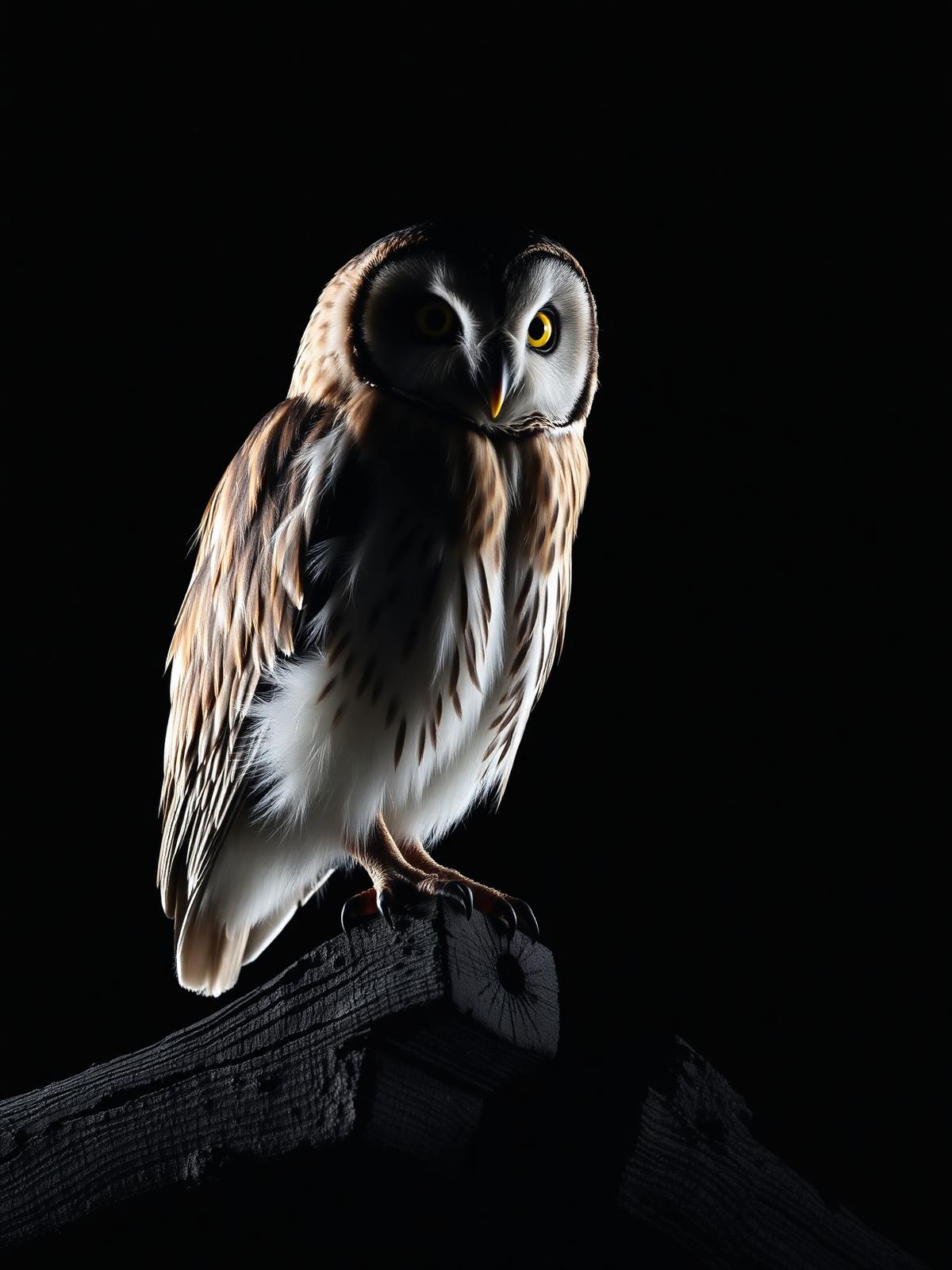
My superpower
I can hear a mouse under two feet of snow.
My personality
Quiet, observant, and fiercely territorial.
My favourite home
Old barns, hollow trees and grassland edges.
My weird habit
I swallow prey whole, then cough up the bones.
About the Barn Owl
The Barn Owl (Tyto alba) is one of the most widespread land birds on Earth, breeding on every continent except Antarctica. Its heart-shaped facial disc, ghost-white underside and silent, drifting flight make it instantly recognisable — even to people who have only ever glimpsed one crossing a country lane at dusk.
Once common on farmland across Europe, Barn Owl numbers have collapsed in many regions over the past century as barns disappeared, hedgerows were ripped out and rodenticides entered the food chain. In the UK it is on the amber conservation list; globally the IUCN still lists it as Least Concern, but many national populations are in steep, quiet decline.
Habitat & range
Barn Owls hunt over open, rough grassland — meadows, field margins, marshes, riverbanks and young forestry plantations — where small mammals live in the tussocks. They roost and nest in cavities: old barns, church towers, hollow trees and, increasingly, specially built nest boxes on wooden poles.
A single pair needs roughly 5 km² of good hunting habitat to raise a brood. Where hedgerows and unmown field edges are preserved, populations bounce back within a few years.
Diet
The Barn Owl is a rodent specialist. In Europe, field voles, wood mice and shrews make up more than 90% of its diet. A breeding pair with young will bring in around 4,000 rodents in a single summer — free, silent pest control for any farmer.
They hunt entirely by sound. The offset ears in the facial disc let them pinpoint a moving mouse under snow, leaf litter or standing grass with astonishing precision, then drop feet-first onto the exact spot.
Behaviour & life cycle
Barn Owls are strictly nocturnal in temperate regions, quartering back and forth over grassland from just after sunset. They rarely hoot; the classic Barn Owl call is a long, rasping shriek used in territorial and courtship displays.
Pairs mate for life and are strongly site-faithful, often returning to the same barn or box year after year. Clutches of 4–7 eggs hatch a few days apart, so the youngest chicks are much smaller than their siblings and only survive in years with plenty of voles.
Main threats
Loss of rough grassland to intensive agriculture, demolition of old outbuildings, and collisions with vehicles on fast rural roads are the three biggest killers. Second-generation anticoagulant rodenticides remain a major hidden threat — Barn Owls take poisoned rodents that are still moving and then die slowly from internal bleeding.
Taxonomy
- Kingdom
- Animalia
- Phylum
- Chordata
- Class
- Aves
- Order
- Strigiformes
- Family
- Tytonidae
- Species
- Tyto alba